Sunday, 6 March 2016

Tapenade and Goat Cheese Turkey Scallopini Rolls


I have a family that loves anything breaded...and I don't always want plain old breaded anything. Which was the case with the turkey scallopini I was making for dinner. I admit to spending a lot of time thinking of other options, until I looked in the fridge and found some leftover basil tapenade.

Together with some goat cheese (which we had quite a lot of) this was my compromise. I spread the tapenade onto the turkey, added some goat cheese, rolled the turkey up and then breaded the whole thing. Admittedly, it was very good. The crunchy bread, salty tapenade and tangy creamy goat cheese worked very well together.

I served it with some spicy garlic oven fried potatoes, green beans and crunchy Parmesan cauliflower.

I made the tapenade a few days before this, using it for a pizza topping. It's quick and easy to make, and I added in some pinenuts, just because there was a tablespoon of them waiting to be used.


Place your ingredients into a food processor:

2/3 cup black olives
1/4 cup capers
1/4 cup roughly chopped fresh basil
1 tablespoon pinenuts
2 - 3 cloves garlic, minced
1/4 cup olive oil
 Juice of half a lemon
1/4 teaspoon black pepper


Process until you have a puree that is as smooth or chunky as you prefer. Mine was almost smooth.

Taste and adjust seasoning.

I had used about half for my pizza, so I used the rest for the turkey rolls.


Heat the oven to 350F. I had mine at 400F to cook the potatoes, then turned it down for the turkey. This allowed the potatoes to crisp and form a nice crunchy outside layer first, before finishing their cooking alongside the turkey.


Lay the turkey scallopini flat on a tray or cutting board. I had 4 pieces.

Divide the tapenade between the 4 pieces and spread it evenly over the turkey. I used about 2 tablespoons of tapenade for each piece of turkey.


Place a layer of crumbled goat cheese on top of the tapenade.


Starting at the narrowest end of the turkey, roll each piece up to form a roll.


Bread each turkey roll in:

Flour with a pinch of cayenne pepper

Eggs whisked with a bit of milk

Breadcrumbs


In a hot pan, using a bit of olive oil, quickly brown all sides of the turkey rolls.

Place the turkey into the oven to finish cooking.


When the turkey is cooked completely, allow it to rest for 5 minutes before cutting each roll in half to serve.


  • Tapenade usually consists of olives, capers, anchovies, parsley and olive oil. I like to include garlic, and to use whichever herbs I have available, which in this case was basil. The addition of lemon juice brightens the paste, and helps to cut through the richness of the oil from the olives, anchovies and olive oil.
  • I omitted the anchovies as I had none.
  • Be very careful when seasoning tapenade as the olives, capers and anchovies are salty. I only added black pepper to start off.
  • Other additions that can be used to add some interest are sundried tomatoes, dried figs, rosemary, green olives instead of black.
  • The tapenade will keep for up to a week in the fridge as long as it is covered. Storebought tapenade can be used instead.
  • Any paste or thick sauce can be used instead of tapenade, and each will give your turkey a completely different flavour profile. Some suggestions include Thai red curry paste; any type of pesto; hummus.
  • Other types of meat can be used...thinly sliced beef, pork or chicken, fish such as sole will all work well.
  • The turkey rolls can be made and breaded ahead of time, up to a day ahead, before being cooked. They can also be frozen at this point. Do not defrost before cooking as the breading will become soggy as it defrosts. Cook from frozen, remembering to allow extra time to fully cook the turkey.

Tuesday, 1 March 2016

Tortilla Soup with Chicken


This was the perfect way to use the cooked chicken and tortillas in the fridge. Oh yes, and some of the many ripe avocados I seem to have accumulated. This is a light tomato broth, with corn, beans and chicken that is garnished with cheese, sour cream, avocado and tortilla chips.

Instead of using purchased tortilla chips, which are full of salt, I made some baked tortilla strips, which are easy to make, and allow you to control the amount of added salt and fat....but they still have lots of crunch to add to the soup.

Start off by baking the tortilla strips. Heat the oven to 350F and have a baking sheet or two ready.


Cut two 10" flour tortillas into 2" strips.

Place the tortilla strips in a large bowl, and add:

1/4 teaspoon black pepper
1/8 - 1/4 teaspoon salt
1/4 teaspoon ground cumin
1 - 2 tablespoons olive oil

Toss well to coat all of the strips with the oil and seasonings, separating them with your finger tips as you do so.


Spread the tortilla strips in a single layer on the baking sheets.


Bake until the strips are golden and crispy, about 10 - 15 minutes, checking halfway through.

Allow them to cool completely.


To make the soup, cook in olive oil:

1 large sliced onion

Season with salt and pepper while cooking.


When the onions are starting to soften, add:

3 cloves garlic, minced
1/4 teaspoon dried chipotle chili powder
1 1/2 teaspoons chili powder
1/2 teaspoon ground cumin


When the onions are soft add:

1 X 28 ounce can of chopped tomatoes, with the juice.

Bring to a boil.


Add:

4 cups chicken stock

Bring to a boil. Taste and add a bit of sugar if the tomatoes are too acidic for your taste. I added about 1 tablespoon of sugar.

Allow the soup to simmer for 30 minutes.


Stir in:

1 cup pinto beans, rinsed
1 1/2 cups frozen corn
1 cooked chicken breast, thinly sliced
Juice of 1 lime


Taste and adjust seasoning.


Serve the soup; allow people to add their choice of toppings: the baked tortilla strips, diced avocado, grated Cheddar and Pepper Jack cheese, sour cream and chopped green onions.


  • If you don't want to make tortilla chips/strips, use purchased tortilla chips. They can be crushed into the soup at the table, or you can crush them before serving them.
  • I like to offer a choice of grated cheese at the table...Cheddar and Pepper Jack give the option of adding a bit of extra heat. White cheddar, smoked white cheddar or queso fresco are other options.
  • Stir some lime zest and juice into the sour cream to add some brightness; alternatively stir some chopped chipotle chilies in adobo sauce into it to add more heat; leave it plain to cool everything down a bit. Plain Greek yoghurt can be used instead of sour cream if you prefer.
  • Chopped fresh chilies can be included in the toppings.
  • I used frozen corn, but corn on the cob can be used instead. If you can, grill the corn and then cut the kernels off the cob and use them to add some smokiness to your soup.
  • Black beans would be my first choice for this soup, but all I had were pinto beans. It doesn't really matter which type of bean you use. If you are using canned beans, make sure you rinse them before adding them to the soup.
  • As you can see in the picture, I used some red onion and some yellow onion. I planned to use a red onion, only to find that I only had about 1/4 of one to use, so I used yellow onion for the rest. Red onions have a slightly milder flavour than yellow.
  • If you want a spicier soup, add more chili powder, chipotle chilies or even a bit of cayenne pepper. Of course, you can also add less if you aren't partial to too much heat, and allow people to adjust the heat at the table by providing chopped chilies and Pepper Jack cheese.


Saturday, 27 February 2016

Beef Bourguignon


Beef bourguignon is a classic French stew, using red wine for the majority of the liquid, and beef stock for the rest. Originating in the Burgundy region of France, the wine that is used is typically a Burgundy red...this is not a hard and fast rule, especially if you are making this as a way to use up left over red wine, which is what I was doing.

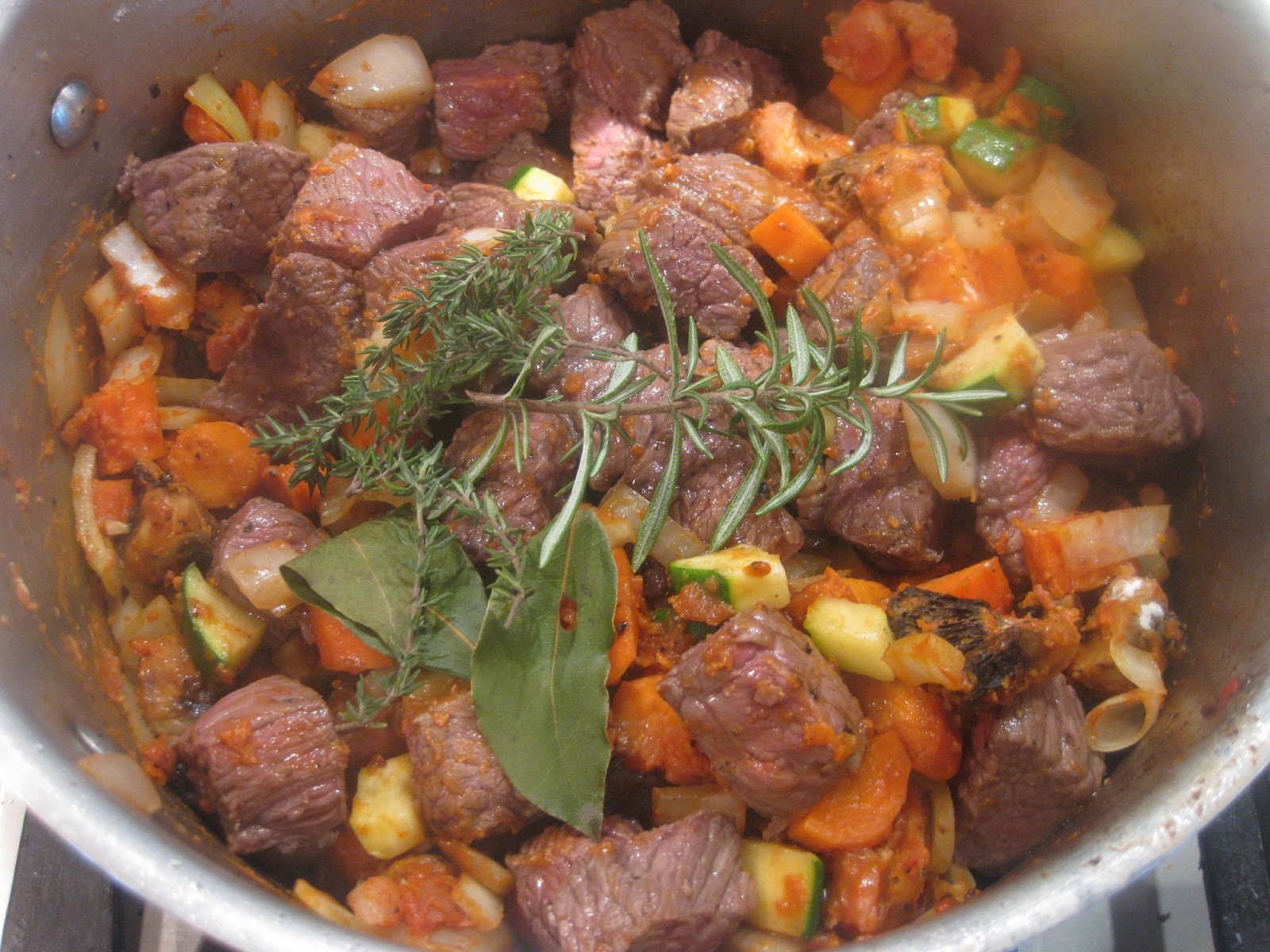
The classic vegetables are onions, garlic and mushrooms, with the addition of pearl onions near the end of cooking. I added my last few carrots and bit of zucchini, because they were there to use.

I had no pearl onions, so I just used yellow onions.

This stew is cooked low and slow, to allow the meat to cook until it is fork tender. It is a perfect dish for using cheaper, tougher cuts of beef.


Cut your beef into 1" chunks. I used:

2 pounds inside round

Season the meat with salt and pepper, and sear in a hot pan, using a bit of olive oil.

When the meat is seared on all sides, remove it and set aside until needed.


Dice:

3 rashers of bacon

Cook the bacon in the same pot that was used to sear the beef. Stir often to prevent sticking and burning.


When the bacon is starting to crisp, add the vegetables:

3 carrots, diced
1 large onion, diced
1/2 zucchini, diced
6 - 8 button mushrooms, quartered

Season with salt and pepper and cook until the vegetables are starting to soften slightly.


Stir in:

1/4 cup tomato paste

Cook for 2 minutes.


Add:

1/4 cup flour

Cook, stirring to coat all of the vegetables, for 2 - 3 minutes.


Return the meat to the pot, along with:

1 1/2 cups red wine
2 bayleaves
a sprig of fresh rosemary
2 sprigs of fresh thyme

Bring to a boil, stirring.


When the wine starts to boil, add enough beef stock to cover the meat and vegetables. Bring to a boil, stirring.

Cover and simmer until the meat is tender; 3 - 4 hours.


Remove the bayleaves and herb stems from the stew. Taste and adjust seasoning. Serve, accompanied by warm, crusty bread to dip into the delicious gravy.


  • Cooking the stew long and slow allows tougher cuts of meat to become tender, and because tougher cuts are often cheaper this is a great way to save money. Try using cuts such as bottom round, chuck roast, shoulder roast, top round.
  • The meat can be cooked on the stove top, covered and simmered, which is what I did. It can also be cooked in the oven at 350F, or in a slow cooker. The key being to cook it for a long time at a low setting in order to effectively break down the connective tissues in the meat and give you the tender pieces you want.
  • Quickly searing the meat seals in the flavour. It also adds a layer of caramelization to the meat, which in turn adds a lot of flavour, depth and a bit of sweetness to the stew.
  • The classic recipe for beef bourguignon calls for you to use a whole bottle of wine. I never do that; instead I use up leftover red wine. We are white wine drinkers, but occasionally buy red wine to make things like Braised Chicken Thighs with Capers, Raisins and Shallots  or beef bourguignon. 
  • If you do not have beef stock, or do not have enough to cover the meat and vegetables completely, use water.
  • Pearl onions are a classical garnish for this stew. If you are not able to buy them peeled and frozen, you will need to peel the fresh onions. The best way to do this is to quickly blanch them in boiling water, then using a sharp knife cut off the root end of the onion and gently squeeze it out of the skin. If you do not want to use pearl onions, just use yellow onions as I did.
  • By adding the extra vegetables in the form of carrots and zucchini the basic flavour of the stew was not changed. In fact, the carrots added a bit of sweetness.
  • The bacon adds saltiness, so I always season lightly at each step of the cooking process...browning the meat, cooking the vegetables...and then adjust the seasoning at the end.
  • The stew can be made 2 - 3 days ahead of time; the flavour intensifies over time. It can also be frozen, cooked or uncooked (cut all the ingredients and freeze in a large re-sealable bag, with the meat and bacon in a separate small bag; all of the prep is done, which saves a lot of time).
  • A benefit to making the stew the day before is the fact that when it cools the fat rises to the top, and once it has been chilled this fat layer sets and is easy to remove from the stew.
  • Add less flour, or more liquid and cut the meat into smaller pieces and you can easily turn this into a soup.
  • The gravy is the best part of this meal, in my opinion, so make sure to serve it with bread, dumplings or noodles to help soak up all that yummy goodness.

Thursday, 25 February 2016

Panzanella


This simple and tasty salad is a great way to use up old bread. It is, as my daughter put it, "a salad of croutons and tomatoes"...but it is so much more than that. The bread is crispy on the outside and soft on the inside, the tomatoes are sweet and juicy, and their juice combines with the oil and vinegar to soak into the bread.

I like to toast the bread in the oven, along with herbs, spices, garlic and Parmesan to add even more flavour. The amount of crispiness depends on your personal preferences; so does the amount of dressing you add and the amount of time you allow the bread to sit and soak it up.

I used up a couple of two day old small round crusty loaves to make the salad. I had just bought some baby heirloom tomatoes, so I had a lot of different colours and shapes to work with.

Start off by heating the oven to 350F and cubing your bread into 1" cubes. I had approximately 4 cups of bread cubes.


Toss the bread with:

peeled garlic cloves
salt and pepper
crushed fennel seeds
olive oil

Spread onto a baking sheet and bake until the bread is starting to crisp up on the outside, but is still soft on the inside.


Sprinkle a handful of grated Parmesan over the bread and place back into the oven.

When the bread has reached the desired crunchiness, remove from the oven and allow to cool completely.


In a large bowl, combine:

2 cups halved grape tomatoes
A handful of grated Parmesan
Salt and pepper to taste


Add:

1/4 cup Balsamic vinegar
1/4 cup olive oil

Allow the tomatoes to sit with the oil and vinegar for about 30 minutes; this will help to draw out some of the tomato juices.


Add the cooled bread to the tomatoes, along with:

2 tablespoons chopped fresh basil

Stir to combine; taste and adjust seasoning. If you feel the bread needs more oil and vinegar, add more.


Serve the salad immediately if you prefer the bread to remain slightly crispy; let it sit a while if you want the bread to absorb more liquid and become a bit softer.


  • Using up old bread doesn't have to mean making just breadcrumbs or bread pudding...this salad turns it into a tasty salad, full of colour, flavour and texture. The bread can be toasted with the herbs, spices, garlic and Parmesan and used as croutons in a green salad or as a soup garnish.
  • Keeping in mind that the bread cubes will crisp up as they cool, remove them from the oven when they are still a bit softer than you would prefer. The ideal for the salad is crunchy on the outside, but still soft on the inside. A more traditional way of making the salad is to soak the stale bread in liquid, and then squeeze out the excess before adding the other ingredients. I prefer to crisp the bread as it adds more interest to the salad.
  • Adding garlic, herbs, spices and cheese to the bread during toasting adds interest to the salad, and complements the flavours of the dressing. Woody herbs such as rosemary and thyme work well; try spices such as chili flakes, cayenne pepper, paprika or garlic powder.
  • If you are able to use heirloom or yellow, orange and red tomatoes you will have the bonus of different shapes, colours and flavours. Roma, grape, cherry or any type of ripe tomatoes that you have available will work well in the salad. Cut them in half, quarters, slices or a combination for interest. The key is that the tomatoes are ripe and juicy.
  • Allowing the cut tomatoes to sit with the salt and vinegar allows the juices to be released, and combine with the oil and vinegar. This dressing soaks into the bread and gives it another boost of flavour.
  • Any vinegar can be used...Balsamic, herb vinegars or wine vinegars.
  • Herbs that can be added along with the tomatoes include basil, parsley, tarragon (use this sparingly as it in a strong herb and can easily overpower other flavours). Green onions or chopped fresh chives can be added as well.
  • For added interest include other ingredients such as olives, chopped sundried tomatoes, artichoke hearts, anchovies - whole or minced, roasted red peppers.
  • The amount of oil and vinegar is a starting point, and should be adjusted according to how crispy the bread is, as well as how much you want the bread to absorb. The longer the bread sits with the dressing and tomatoes, the more liquid it will absorb, so keep this in mind when combining them before serving the salad. I let my salad sit for about 20 minutes, as I wanted the bread to remain slightly crunchy.
  • This salad does not keep well once the bread has been added to the tomatoes.


Wednesday, 17 February 2016

Macadamia Nut Banana Bread


The number of overripe bananas in the freezer was growing and it was time to use some of them. I wanted to make something other than just plain old banana bread; a closer look in the cupboard and I found some macadamia nuts and rum...

Start off by greasing two 8" X 5" loaf pans, and turning the oven on to 350F to heat up.


In a small saucepan, combine:

2 ounces butter
1/3 cup brown sugar


Heat slowly until the butter is melted and the sugar dissolved, whisking to combine the two.

Bring the caramel to a boil.


When it starts to boil, whisk in:

1 teaspoon vanilla
1/2 teaspoon cinnamon
1 1/2 tablespoons rum

Remove from the heat.


Divide the caramel between the two prepared pans, and sprinkle with macadamia nut halves.

Set aside while you make the banana bread batter.


Cream together:

4 ounces soft butter
1 cup white sugar


Add, one at a time:

2 eggs
1 teaspoon vanilla


Add in:

1 cup mashed ripe bananas

Mix until just combined.


Sift together the dry ingredients:

2 cups flour
1 teaspoon baking soda
1 teaspoon baking powder

Add 1/3 of the dry ingredients to the batter, and mix until just combined.


Mix in:
 
1/2 cup plain Greek yoghurt


Add the remaining dry ingredients in two additions, alternating with another 1/2 cup of Greek yoghurt.


Divide the batter between the two pans, carefully spreading it over the caramel and macadamia nuts.

Place the pans into the oven and bake until a wooden skewer comes out clean, about 40 - 45 minutes.


Immediately run a knife between the loaf and the pan, and invert onto a cooling rack.


Allow the loaves to cool slightly before cutting...


  • Bananas that are too ripe and soft for eating can be frozen if you are not using them right away. They can be frozen in the skin, nice and easy. Defrost, then cut them open and the flesh will slip out of the skin, ready to use. The other option is to mash them, and freeze them in containers; pre-measuring the fruit before freezing makes defrosting the right amount for your recipe easy.
  • Another way to use ripe bananas is to slice and freeze them to use in smoothies instead of ice.
  • As with any recipe using nuts, the type you choose is up to you. Nuts that work well with bananas include pecans, peanuts or almonds. Whole nuts are best for this recipe. If your nuts are chopped or ground, fold them into the batter before baking.
  • Another option if you are using ground nuts is to add them to a basic crumble and spriunkle it on top of the batter before baking. A basic crumble recipe is 1/4 cup each of flour, brown sugar and oats mixed with 1 - 2 ounces of butter until crumbly. Nuts, coconut and spices such as cinnamon, ground ginger or nutmeg can be added as well.
  • The rum can be omitted from the caramel. It can also be replaced with orange juice, brandy or liqueur.
  • I used plain Greek yoghurt as I had no sour cream; sour cream will add richness to the loaf.
  • This banana bread is best served at room temperature or warmed up. It will last a couple of days, well wrapped. It can also be frozen.

Wednesday, 10 February 2016

Whiskey Butter Basted Chicken Breast with Orzo and Arugula


The idea of using the whiskey to baste meat while cooking has been in my mind for a while, and I decided to try it out with these chicken breasts. It was so simple, but the taste and tenderness of the chicken was out of this world! I love it when something so easy gives such great results...everyone thinks I spent hours making the meal...

I chose to accompany the chicken with warm orzo and arugula. This allowed me to use the arugula I had bought and not yet used. Folding it into the hot orzo wilted it, and I added in the last handful of grape tomatoes to make a very satisfying side dish.

Steamed green beans and a quick crumble of goat cheese and dinner was ready!

While the chicken is cooking, bring a large pot of lightly salted water to a boil and cook 1 1/2 cups of orzo. Drain and return to the pan when it is done.


In a heavy bottomed pan that is large enough to hold your chicken breasts, melt:

2 tablespoons butter
1 tablespoon olive oil
1/4 teaspoon pepper
1/4 teaspoon salt


When the butter starts to bubble, add:

4 boneless, skinless chicken breasts

Place the chicken skin side down, and keep the heat at a medium high temperature.


When the first side of the chicken is seared, turn the breasts over.

Add:

1/4 cup whiskey


Turn the heat to medium low and cook the chicken, turning often, as well as basting with the whiskey and pan juices, until it is fully cooked.

The liquid will slowly reduce and glaze the chicken as it cooks.

Remove the chicken from the pan, and allow it to rest in a warm place, loosely covered.

Keeping the heat on, add to the pan:

1 handful of grape tomatoes, halved
2 green onions, thinly sliced
2 cloves garlic, minced

Season with salt and pepper, and cook quickly, shaking the pan to move them around until the tomatoes start to colour and the skin blisters slightly.


Immediately scrape the tomatoes, onions and garlic into the pot of cooked orzo.

Reserve the pan to make a quick sauce for the chicken.


Turn the heat on, and add:

1/2 cup chicken stock

Bring to a boil, scraping the bottom of the pan to remove all the browned bits (they have all the flavour).

Allow the stock to reduce down by half while you finish off the orzo.


To finish off the orzo, add:

a handful of grated Parmesan
1 tablespoon chopped fresh basil

Gently stir this into the orzo, taste and adjust the seasoning.


Fold:

2 large handfuls of washed baby arugula into the orzo.


To serve, place some orzo and arugula onto the plate, and top with steamed fresh green beans and a bit of crumbled goat cheese. Drizzle the reduced chicken stock over the chicken breast...this simple sauce has all the flavours of everything that was cooked in the pan...whiskey, chicken, tomatoes, green onions and garlic.


  • The simplicity of this dish is hidden by the tenderness, moistness and amount of flavour in the chicken. By searing the vegetables in the same pan, you tie the two items together nicely.
  • You can use all butter or olive oil if you choose. I used both as I wanted the richness of the butter, but if not watched carefully it can burn. Adding a bit of olive oil to the butter reduces the chances of burning the butter.
  • If you have a prepared flavoured butter, this can also be used.
  • Whiskey was my choice because I am slowly working my way through the bottle that we have, which no one drinks! Any liquor can be used...wine, bourbon, rum.
  • The orzo can be served hot, or can be made ahead and served as a cold salad, which is what happened with the leftovers...lunch the next day.
  • Other greens can be substituted for the baby arugula. Try regular sized arugula (shredded or torn), spinach, shredded Brussels sprouts, beet greens.
  • The basting method can be used with pork chops, or pork tenderloin. It also works well with fish such as salmon, cod or scallops.
  • By basting, or frequently turning the chicken, the meat is kept moist, and as the liquid reduces it creates a glaze on the outside of the meat. If the liquid is reducing too quickly, you can either add more, turn the heat down or cover the pan for a while.