Sunday, 13 September 2015

Cajun Pork Medallions with Potato and Vegetable Hash


When I asked my husband what he wanted me to do with the pork tenderloin for dinner he said"Cajun", and added "with potatoes". The potato part was simple...I had a few purple and yellow baby potatoes to use, and I combined them with some red pepper, zucchini, onion and corn to make a quick hash to serve with the pork.

The Cajun part required me to make a spice blend, as this is not something we make very often, and I had none in the house. This was actually a good thing though, as the purchased blends are often very high in salt, and I could control that by making my own. I enjoyed choosing which spices I was going to use, and mixing and tasting the results. I ended up with a reasonably balanced spice mix, that had just enough heat to satisfy the heat lovers in the house, without torturing the others.

I had a pork tenderloin, and sliced it into medallions instead of leaving it whole, partly to speed up the cooking and partly for something different to what we normally have.

When making the spice blend I put my own twist on it, by using roasted garlic powder instead of plain; some smoked paprika; a black, pink and green peppercorn blend and as I mentioned earlier a lot less salt.

To make the Cajun spice blend, combine the following herbs and spices:


1 tablespoon Spanish paprika
1 teaspoon smoked paprika
1 teaspoon mixed peppercorns, ground
1 teaspoon roasted garlic powder
1 teaspoon onion powder
1/4 teaspoon dried oregano
1/4 teaspoon dried thyme
1/4 teaspoon ground cumin
1/4 teaspoon cayenne pepper
1/2 teaspoon celery salt
1/2 teaspoon salt


Make the potato hash by boiling baby potatoes in lightly salted water until just tender. Drain, and cool. Cut them into quarters and set aside.

Thinly slice onion, zucchini and red pepper and add to a hot wok with a bit of olive oil. Cook, stirring often to avoid burning for a couple of minutes and then add in the potatoes. Add more oil if needed to avoid sticking to the wok, and remember to stir often! Season with salt and pepper during cooking.

Add frozen corn and cook until it is heated through. Taste and adjust seasoning. I cooked the hash while the pork was in the oven.

Turn the oven on to 350F.


Slice the pork tenderloin into 1" thick slices. The smaller end pieces can be cut into thicker slices and then butterflied so that they are the same thickness.


Put some of the Cajun spice onto a small plate, and carefully roll the outside edges of your medallions in the spices.


In a very hot pan, with olive oil, sear the spiced edges of the pork, turing them carefully as each side becomes 'blackened'.

Remove each piece as it is done and set aside until all of the pieces have been seared.


Carefully wipe out the pan using a piece of paper towel, to remove any bits of burned spices that remain. Heat the pan again.


Add a bit of olive oil to the hot pan, and replace the pork, large side down to quickly sear it.

Turn the pork over and place the pan into the oven.


Bake until the pork is cooked through. This took about 10 - 15 minutes.

Remove the pork from the oven and allow it to rest before serving it.


I served the pork on a bed of potato and vegetables hash, along with some roasted carrots. Reserve the pan juices, and spoon them over the pork and potatoes.


  • Cajun, or blackened, food is a style of cooking that relies on an incredibly hot pan to sear meat that has been coated with a Cajun spice blend. This quickly sears the meat, keeping it juicy inside, and creates a spicy blackened crust on the outside. Often used for fish and chicken, it can be used for most meats, as long as the meat is a cut that will retain tenderness without a long, slow cooking method.
  • The spices most often used in Cajun blends are paprika, cayenne pepper, salt, cumin, dried thyme and oregano, garlic and onion powder. Traditionally, file powder is also included. This is dried sassafrass leaves, that have been ground. Mustard powder can also be added.
  • The amount of heat you create with your spice blend is entirely up to you. Increase the cayenne pepper and peppercorns until you are satisfied with the intensity.
  • If you have onion salt and/or garlic salt, you might want to consider omitting the regular salt as these are both incredibly salty spices.
  • Another way to increase the spiciness of the pork is to coat all of the sides of the medallions with the spices, before blackening them.
  • The meat was incredibly juicy, and using the pan juices as a sauce allowed us to enjoy all of the spice flavours. To increase the amount of sauce, remove the meat from the pan to rest, and heat the pan juices along with some chicken or beef stock.
  • The pork can be left whole and coated in the spice blend before being seared and then roasted. Thinly sliced and served with a salad, over rice, or in a sandwhich this is a versatile dish.
  • Instead of pork, use chicken breasts; firm fleshed white fish such as snapper, halibut or tilapia; prawns or scallops.
  • Leftover blackened fish can be flaked, and used to make fish tacos. Finely shred cabbage, carrots and green onions and toss with lime juice and cilantro to make a slaw. Add some diced avocado to finish off your taco toppings, and serve in a warm tortilla.
  • The Cajun spice blend can be added to soups or rice. It can also be mixed with mayonnaise to make a spicy condiment. 
  • A spice blend that is kept in a tightly sealed container, in a cool dry place, will keep for a few weeks. See the post The Spice Drawer for tips on storing and using spices.

Wednesday, 9 September 2015

Balsamic Chimichurri Beef Brochettes


Parsley is not a herb I use often; I prefer stronger flavoured herbs such as basil and rosemary. I also tend to head out to the herb garden, where I never seem to plant parsley! I had, however, bought a bunch and it was needing to be used up soon...the first thing that came to mind was chimichurri.

Chimuchurri is an Argentinian sauce that is used with grilled meats, and has a base of parsley, along with garlic, onion, vinegar and olive oil. This would be perfect to use with the beef tenderloin ends that were left over from something else we had made. Brochettes it was!

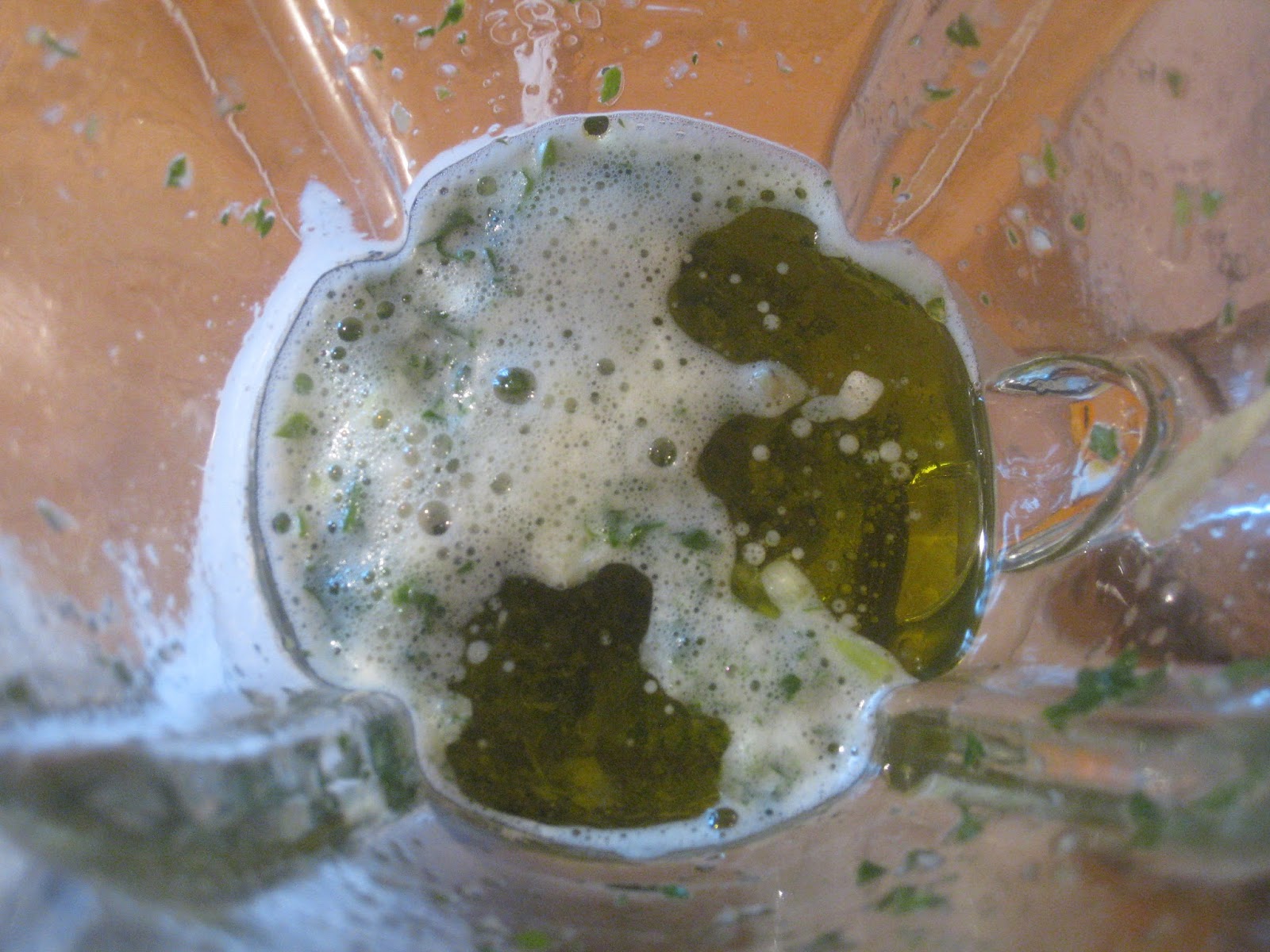
Chimichurri uses red wine vinegar, but I had none, so I substituted balsamic vinegar. This did give a strange looking sauce, but the taste was not compromised in any way.

I grilled peppers, mushrooms, zucchini and onions for a salad, and made the Corn, Tomato and Avocado Salad as well.


In a small bowl, combine:

2 tablespoons olive oil
1 teaspoon kosher salt
1 teaspoon ground pepper
1/2 teaspoon ground cumin


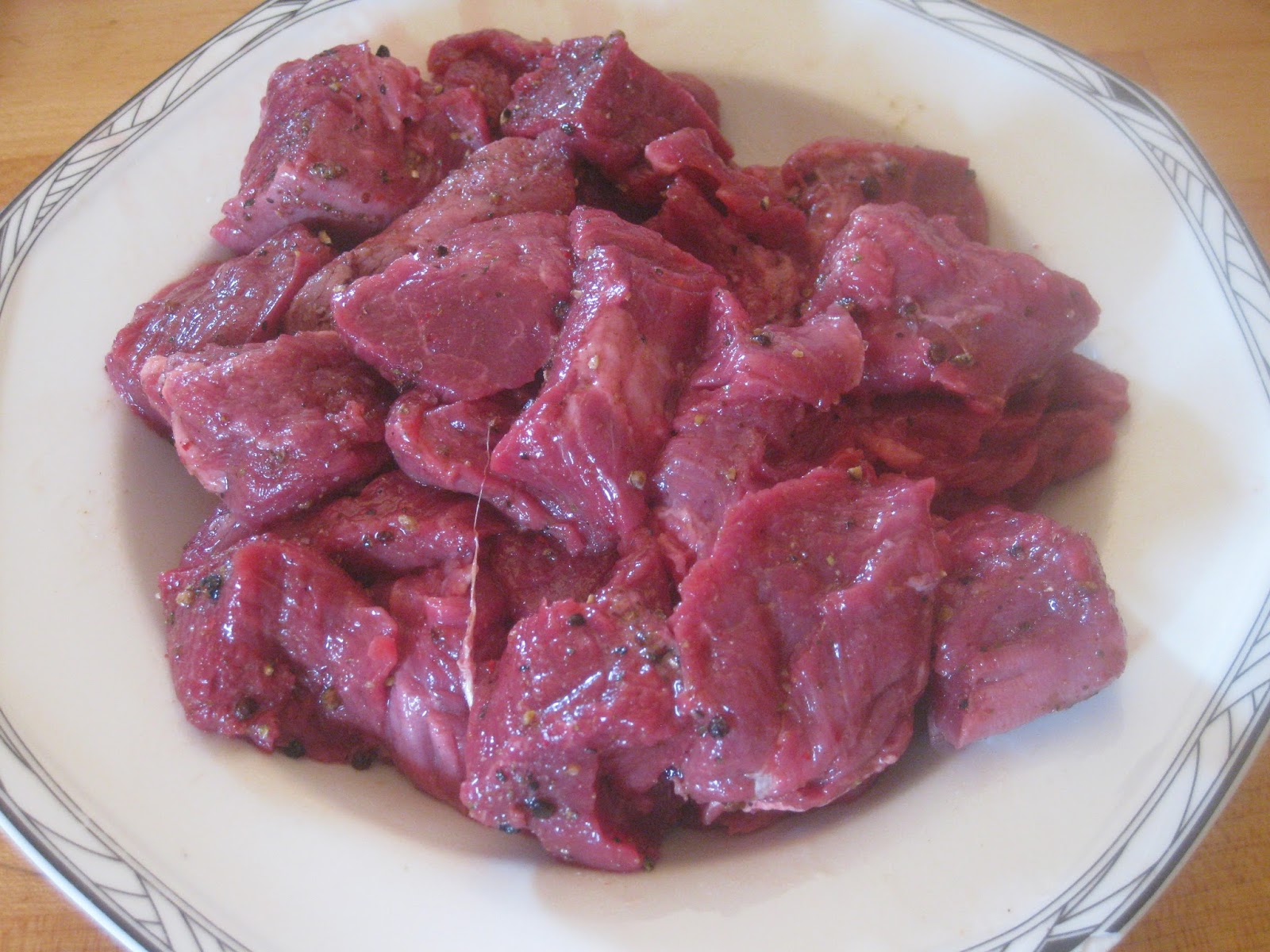
Cut the beef tenderloin into 1" chunks; I had 32 pieces, enough for 8 brochettes.

Rub the oil and spice mixture over the meat, cover and refrigerate for about 4 hours.


To make the chimichurri, place the following into a blender:

1/2 cup lightly packed fresh parsley
4 green onions, roughly chopped
3 cloves garlic, halved
1/4 cup Balsamic vinegar
1/4 cup olive oil


Puree until you have a smooth paste.

Taste and adjust seasoning. Add a pinch of chili flakes.

Keep refrigerated until needed.


About an hour before you start to grill the meat, remove it from the fridge.

Pour the chimichurri over the meat and mix well to combine, making sure that all of the meat pieces are well coated.


Place the beef chunks onto skewers. I used 4 pieces per brochette.

Cover and leave to come up to room temperature.


Cook the brochettes on a hot grill, turning often until done to your liking.

Allow the meat to rest for 5 minutes before serving.


Serve the brochettes, 2 per person, accompanied by side dishes of your choice. Extra chimichurri sauce can be passed at the table.


  • Parsley is the traditional herb for chimichurri, but it can be used with other herbs such as oregano, basil or cilantro. I used both the leaves and the stems, as the stems are tender enough to puree in the blender.
  • I used the green onions as I had four in the fridge and I prefer the milder taste of them over that of raw white or red onion. That being said, use the onions you have or like most.
  • As I mentioned, red wine vinegar is the usual type used when making chimichurri. The Balsamic gave the sauce a bizarre brownish green colour, but the taste was great. Balsamic vinegar is a bit stronger than red wine vinegar, and I also find that it can be a lot sweeter if you are using a well aged variety. White wine vinegar can also be used.
  • I used less olive oil than would normally be used; add extra if you want a runnier sauce.
  • Lemon zest can be added to the sauce to give a bit of brightness and freshness. Add a bit of the juice as well if you want.
  • I used a combination of black, green and pink peppercorns along with the ground cumin and olive oil rub. Use only black if that is what you have available.
  • Rubbing the meat with the salt, pepper and cumin allows it to absorb some flavour before you put the chimichurri onto it. Beef tenderloin doesn't really need to marinate for tenderness, which is why I chose not to add the chimichurri right away. 
  • If you use a less tender cut of beef, such as sirloin, leg or shoulder of lamb or chicken breast the chimichurri can be added to the meat and left overnight, or for at least 8 hours to help tenderize the meat. 
  • The meat can be cubed, combined with the chimichurri, put onto the skewers and frozen, well wrapped. Defrost the meat before cooking.
  • The meat can also be put onto a baking sheet and broiled, with or without skewers.
  • The chimichurri can be served as an accompanying sauce to plain grilled meats as well, instead of being used as the flavouring for the meat.
  • Mix a bit of chimichurri into some mayonnaise and add to burgers, wraps or sandwhiches.

Monday, 7 September 2015

Chicken Breast Stuffed with Brie, Asparagus and Basil


My plan to use asparagus as a side was doomed from the start as there were only 12 spears of asparagus to use; using it to stuff the chicken, along with some Brie ended up being the delicious answer to that problem. As for side vegetables? I made salad, using the last of the mixed greens, the grapefruit, pecans and a Balsamic vinaigrette that was in the fridge.

This chicken was simple to make, easy to cook, and very moist and juicy, thanks to the Brie. The chicken juices and bits of melted Brie in the pan provided us with a tasty sauce.

While the chicken was baking, I prepared the salad, so everything was ready to go in less than an hour...this includes stuffing the chicken!

Start off by pre-heating the oven to 350F.


Prepare the stuffing ingredients:

12 spears asparagus, tough end snapped off
9 basil leaves
3 thin slices of Brie


Cut the chicken breasts in half, without cutting right through, forming a pocket as shown.

I used 3 breasts, 1 per person.


Lightly season the inside of the pocket with salt and pepper.

Lay 3 basil leaves on one side of the pocket.


Lay a piece of Brie on top of the basil leaves.


Lay the asparagus on top of the Brie, tucking the ends into the uncut end of the pocket if needed.

The tips will overhang the end of the chicken a bit, and crisp up as they roast.


Fold the chicken breast over, tucking the filling  in as you close the pocket.

Use a toothpick to secure the side.


Lightly season the chicken breast with salt and pepper.


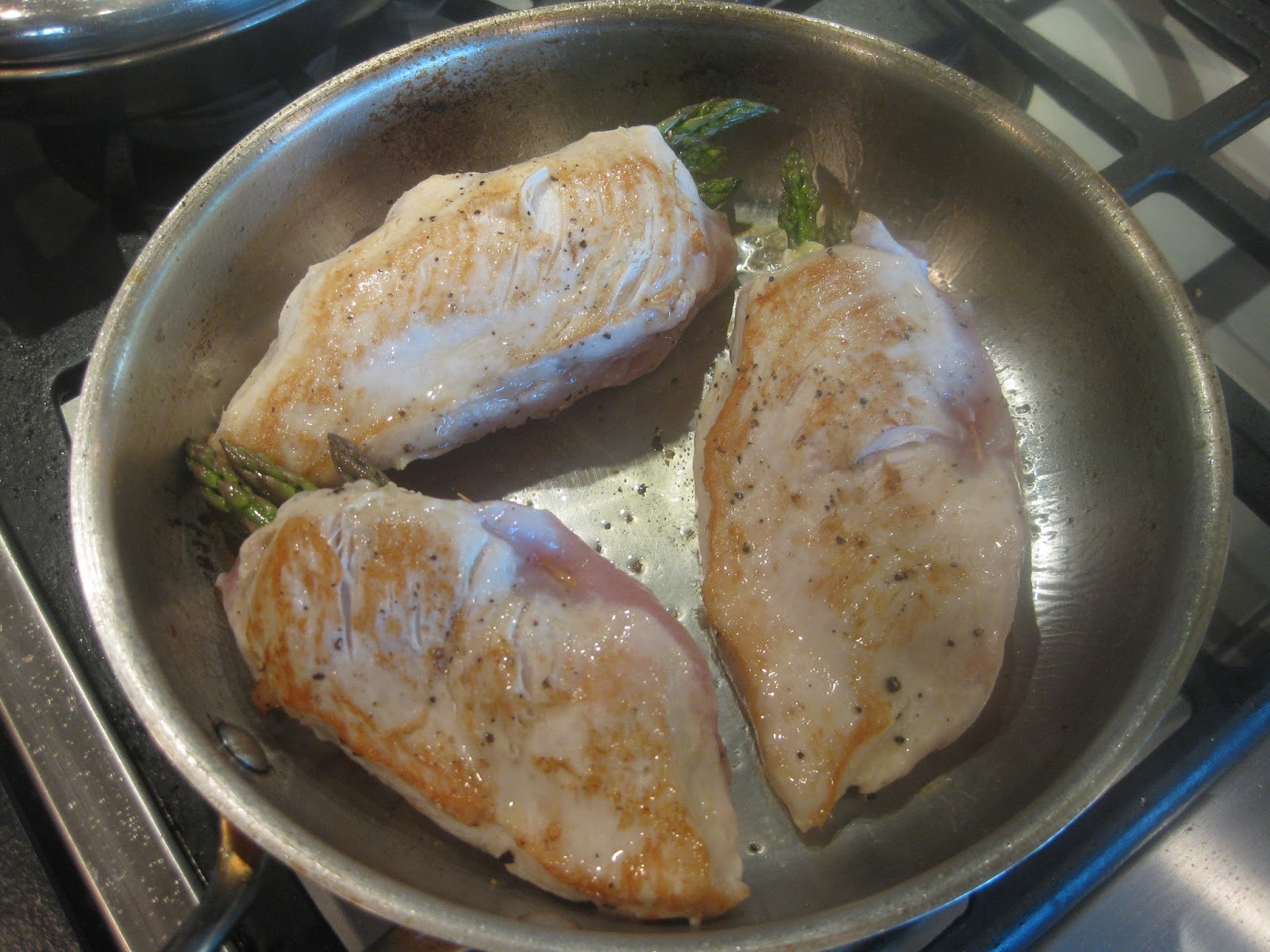
Using a hot pan that can be placed directly into the oven, and some olive oil, quickly brown the skin side of the chicken breast.

Turn the chicken over and place the pan directly into the oven.


Bake until the chicken is cooked through; this took about 20 - 25 minutes.

The Brie will melt, and some of it will leak out and combine with the chicken juices, to form a simple pan sauce.


Allow the chicken to rest for 5 minutes before cutting in half, and serving. I served it with salad; any starch and vegetables will be good with this tender, moist and flavourful chicken.


  • This recipe can easily be  multiplied or divided, as the stuffing is based on a pieces per chicken breast ratio.
  • When using fresh asparagus, gently bend the spear and it will naturally snap where the tender portion with the tip meets the tougher portion. The tougher portion can still be used...thinly sliced and blanched, it can be added to salads, pasta or risotto.
  • I had a piece of Brie to use, but other cheeses that would work well are smoked white cheddar, bocconcini, Havarti, Provolone or Swiss cheese.
  • Feel free to use other fresh herbs, just be sure that they are tender enough to eat once they are cooked. If you use thyme, it would be a good idea to strip the leaves from the stems. The same goes for rosemary. Oregano, sage or parsley will work as they are as the leaves are larger and tender.
  • Other things to consider stuffing the chicken with are sundried tomatoes, thinly sliced; artichoke hearts, thinly sliced; fresh or roasted red pepper; prosciutto or ham.
  • If you want to make more sauce, remove the chicken breasts from the pan to rest, and add some chicken stock to the pan. Bring it to a boil and let it simmer for a few minutes to reduce a bit.
  • Whipping cream can also be added to the sauce, if you want to make a cream sauce. I feel that the Brie is rich enough, but that's a personal choice.
  • The chicken breasts can be stuffed a few hours ahead, or even a day ahead, and kept well wrapped in the fridge until it is time to cook them.
  • The chicken can be seared on the grill before being placed in the oven if you like. This was my original plan, but weather forced me to do it all indoors.
  • Other meats can be stuffed the same way...pork tenderloin, cut into individual sized pieces before stuffing; turkey breast which can then be sliced to serve, displaying the stuffing nicely; thinner fish fillets such as sole ( see the post Sole Fillets with Asparagus, Grape Tomatoes and Avocado).

Wednesday, 2 September 2015

Baked Peaches with Pinwheel Biscuits


I was given 5 pounds of beautiful fresh peaches, my absolute favourite fruit. Of course, not even I could eat that many peaches without feeling any ill effects! I sacrificed some of them to make this lovely dessert...simple, baked peaches accompanied by a spiced brown sugar and pecan pinwheel biscuit.

The biscuit dough uses whipping cream, and I had exactly enough for this recipe. Perfect, as it was due to expire in 2 days.

The dough takes a bit of time to make, but the soft biscuit and sweet filling are well worth it...besides, the peaches are quick and easy to make. It's a good trade off.

Start the biscuits first, as they need to chill before being baked.


In a small bowl, mix together:

1/2 cup brown sugar
1/2 teaspoon cinnamon
1/4 teaspoon ground ginger

Set aside until needed.


Measure out 1/2 cup of chopped pecans, and set aside. Melt 1 tablespoon of butter and keep warm until needed. Measure and cut a 9" X 15" piece of parchment paper.


In the bowl of a stand mixer, combine:

2 cups flour
1/2 cup sugar
2 teaspoons baking powder
4 ounces cold butter


Using the paddle, mix the dry ingredients and butter on a low speed, until it is the texture of breadcrumbs.


Add:

2/3 cup whipping cream
2 teaspoons vanilla


Mix on a low speed just until a rough dough forms. Add more cream if needed, 1 tablespoon at a time.

Remove the dough from the mixing bowl onto a lightly floured counter. Gently press the dough together to form a ball.


Place the ball of biscuit dough on the piece of parchment paper that you cut earlier.

This will enable you to roll the dough out to the desired size, as well as helping with the rolling up step.


Using the parchment paper as your guide, roll the dough out to a rectangle that is approximately 9" X 15".

Brush the surface of the dough with the butter that you melted.


Sprinkle the brown sugar spice blend evenly over the dough. Scatter the chopped pecans over this.


Turn the dough so that the long side is facing towards you. Using the paper to help, roll the dough and the filling up, jelly roll style.


Wrap the parchment paper around the roll of biscuit dough, carefully place onto a baking sheet and refrigerate while you prepare the peaches for baking.


Heat the oven to 350F.


Peel and slice:

3 1/2 lbs fresh peaches

Add:

1/2 cup sugar
1 tablespoon flour
2 teaspoons lemon juice
1 teaspoon vanilla


Gently mix until the peaches are coated with the sugar, flour and vanilla.

Place the peaches into an ovenproof dish and into the oven to bake.


Bake until the peaches are tender, and the juices are bubbling. This should take 45 minutes to an hour.


Turn the oven up to 375F, and line a baking sheet with parchment paper.


Remove the parchment paper from the roll of biscuit dough, and place the dough onto a cutting board.

Cut the roll of dough into 1" slices, and place them cut side down onto the baking sheet.


Bake until the biscuits are light in colour, with the brown sugar spice filling bubbling, about 25 -30 minutes.


Serve the warm peaches with one or two of the biscuits; the biscuits can be used to soak up all of the sweet peach juices. If you wish, a scoop of ice cream of a dollop of whipped cream can be added.


  • This dessert is my take on peach cobbler. I am not a big fan of traditional cobbler, as I find that too often the bottom of the biscuits are soggy. Baking them separately from the filling is my answer to this.
  • If you wish to turn this into a traditional cobbler, add more flour to the peaches before baking them, which will give you a thicker filling. Slice the biscuit dough and place it on top of the peaches, and then bake everything together, until the biscuits are puffed and golden, and the peaches are bubbling and thickened.
  • The spices in the pinwheel filling can be adapted...try spices such as aniseed, nutmeg, star anise. 
  • Citrus zest can be added to the biscuit dough, or to the brown sugar filling.
  • Milk can be used if you have no whipping cream; the cream gives a richer biscuit.
  • Nuts are optional in the filling; I like the crunchy texture they add to the dessert. Any nuts can be used. As an alternative, use dried fruit such as raisins, cranberries or cherries to add a chewy element.
  • These biscuits are a quick and easy alternative to making yeast dough cinnamon buns.
  • The rolled biscuit dough can be made a day or two ahead of time, and kept well wrapped in the refrigerator. It can also be frozen, well wrapped, until needed. Defrost the dough in the fridge before slicing and baking.
  • The peach filling can be adapted to suit available fruit...some suggestions are plums, berries, rhubarb, apples, pears, cherries or any combination of fruits. 
  • Flavour the filling with spices, zest or extract appropriate to the fruit you are using. Try cherries with orange zest, cinnamon and almond extract; mixed berries with lemon zest and vanilla; plums with grated fresh ginger and vanilla; rhubarb and strawberries with cinnamon, nutmeg, lemon zest and vanilla.
  • Cornstarch can be used instead of flour as a thickener, but avoid using it with more acidic fruit such as cherries or rhubarb. If you choose to use cornstarch instead of flour, use half the amount that the recipe calls for, in this recipe you would use 1 1/2 teaspoons of cornstarch instead of 1 tablespoon of flour.
  • If you use frozen fruit instead of fresh, the amount of flour needs to be increased. Double the amount of flour, and do not thaw the fruit before using it. Keep in mind that it will take longer to bake, as it needs to defrost before it will start to heat up and thicken. Freezing seasonal fruit, already cut up and ready to go, makes it quick and easy to put together a dessert like this.
  • The fruit filling can also be used as the base for a crumble, a pie filling (you might want to increase the flour a bit) or a warm topping for ice cream.

Monday, 31 August 2015

Baby Greens with Flank Steak, Papaya, Blue Cheese and Papaya Seed Dressing


While making fruit salad for breakfast I was inspired to use the papaya seeds in the remaining half papaya to make a salad dressing. Papaya seeds have a slightly peppery bite to them, which works well in a salad dressing. I had a very juicy lime, which I used as part of the acid in the dressing.

Of course I also used the papaya, and added the last piece of blue cheese as a contrast to the sweetness of the papaya. I had some smoked flank steak, courtesy of my husband, and cut that on the bias into thin slices to add to the salad, turning the salad into a light dinner.


For the papaya seed dressing, roughly chop:

2 green onions
1 clove garlic
1 tablespoon fresh parsley

Remove and set aside 2 tablespoons papaya seeds.


Place the green onion, garlic and parsley into the blender, along with:

2 tablespoons lime juice
2 tablespoons rice wine vinegar
1/2 cup olive oil

Blend until everything is finely chopped.


Add in:

2 tablespoons papaya seeds
1 heaped teaspoon Dijon mustard
1 teaspoon honey

Blend until you have a creamy dressing.


Taste and adjust acidity and sweetness by adding more lime juice, honey or oil as needed.

Season with salt and pepper to taste.

Keep refrigerated until needed.


Thinly slice the half papaya.

Thinly slice the flank steak on the bias; I used just under half a pound.

Crumble the blue cheese.


Assemble the salad.  I used washed mixed baby greens, tossed with the papaya seed dressing.

Top with the sliced papaya and flank steak, and crumble the blue cheese around the plate.

Drizzle a bit of extra dressing over.


  • The papaya seeds get crushed by the blender, and look like ground black peppercorns. This also releases the peppery flavour.
  • The seeds can also be eaten whole, rinse them to remove any fruit that is attached to them.
  • Papaya seeds can be dried after rinsing them, and then used as a substitute for black pepper. Crush them using a mortar and pestle, or in a spice grinder, and use them when you would use pepper in a recipe.
  • The seeds can be added to smoothies, along with the papaya, and other fruits. Extra seeds can be stored in the freezer.
  • The papaya seed dressing can be made 2 to 3 days ahead, and kept in a well sealed container in the fridge. Leftover dressing can also be used as a marinade; papaya seeds contain papain, which is  a natural tenderizer, but they also add flavour to the meat.
  • Add the fruit of the papaya to chicken or shrimp salad; dice it and mix with minced cilantro, minced red onion, garlic and lime juice to make a quick salsa to serve with grilled fish; remove the seeds and fill the papaya with crab salad; top your favourite cheesecake with thinly sliced papaya.
  • I used smoked flank steak, at room temperature. Marinated and grilled flank steak can be substituted...room temperature, cold or hot. Use some of the papaya seed dressing to marinade the steak if you like.
  • Other meats can be used instead of flank steak...chicken breast, shrimp or scallops, pork tenderloin, grilled sausage.
  • Add some warm crusty bread to round out the meal. This salad is great for a lunch or light dinner; it made enough for two people.