Wednesday, 1 April 2015

Baked Halibut with Bacon-Chive Panfried Potatoes


With halibut season upon us, it was only right that we have some for dinner, along with the baby potatoes that I had not used yet. There was a lemon, some fresh asparagus and lots of bacon to be used, and the herb garden is really starting to fill out with the beautiful Spring weather....chives are abundant right now.


The potatoes were easy... baby potatoes, white, red and purple which I washed and placed in a pot with cold water and a bit of salt.

Bring to a boil and cook until they are just tender.


Drain the potatoes and leave in the colander to cool down until you are ready to cut and finish cooking them.


Dice 4 rashers of bacon and cook on a low heat in a large pan; I like to use a wok.

Add 1 teaspoon of ground black pepper.

Cook until the fat starts rendering before turning up the heat.


Turn the heat up and add 1 sprig of fresh rosemary to the pan.

Cut the potatoes into quarters, or slices, whichever you prefer, while the bacon cooks.

Continue to cook until the bacon starts to crisp. Stir regularly; the smell of the rosemary is amazing!


At this point turn the oven on to 400F to heat for the fish.


Add all the potatoes to the bacon, add a bit of salt (you can always add more later, remember bacon is pretty salty) and continue to cook, stirring occasionally until the potatoes are crispy on the outside and tender and fluffy on the inside.


For the fish, combine:

zest of half a lemon
1/2 teaspoon black pepper
1 clove garlic, minced
1/4 teaspoon salt
1 teaspoon olive oil
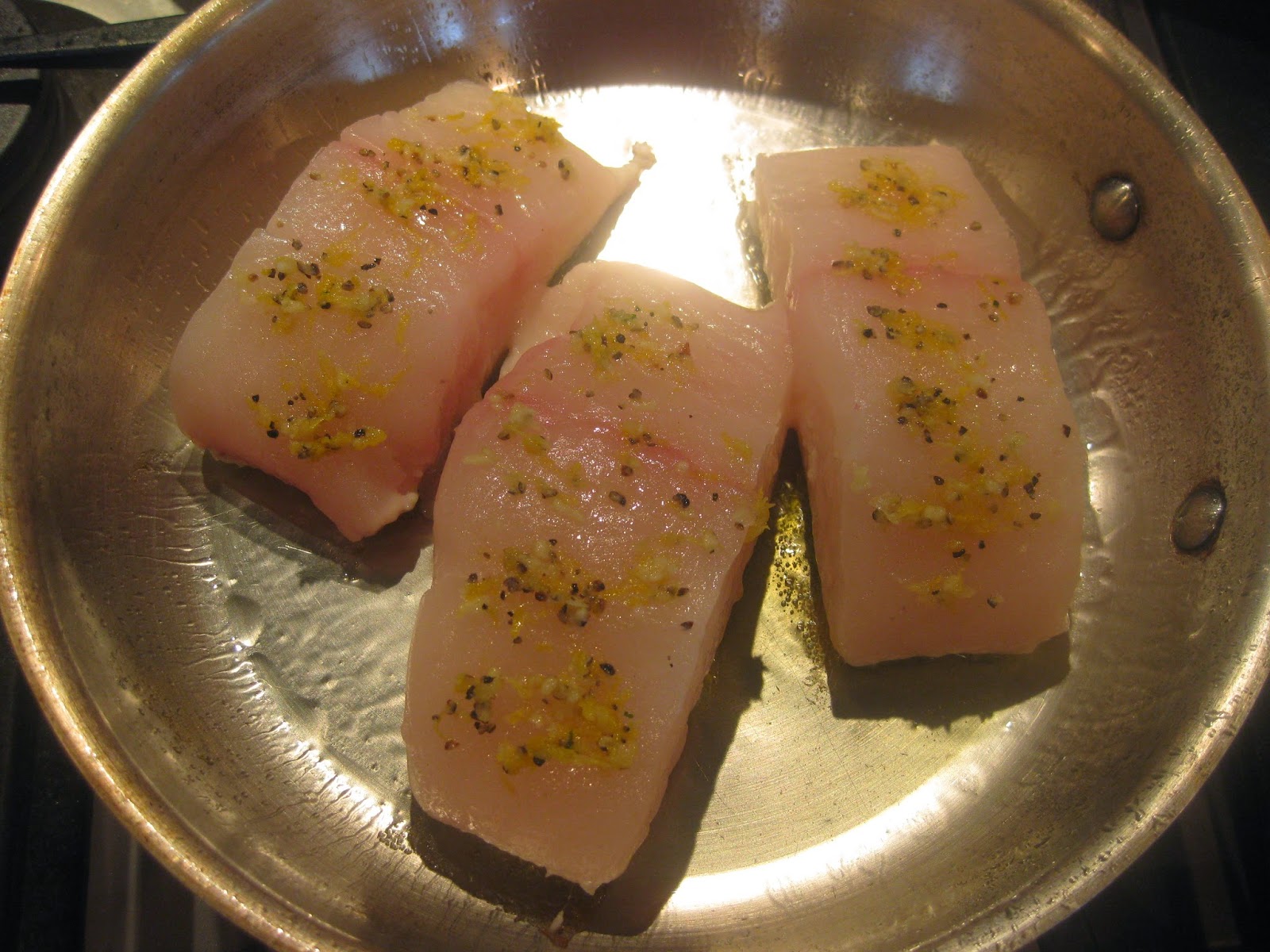


Heat a heavy bottomed pan on high heat, adding a bit of olive oil.

When the oil is almost smoking, add the fish, skin side down.

Rub the lemon zest paste onto each fillet, then remove from the stove top and place the pan into the oven to finish cooking the fish.


You want to allow about 10 minutes per inch of thickness if you start the fish in the pan. If you place it directly into the oven you allow between 12 - 15 minutes per inch of thickness. You can feel if the fish is done by gently pressing the sides of the fillet; as it cooks it will firm up. You can also see if the middle is not cooked by the colour change on the side of the fish.


Finish off the potatoes while the fish is in the oven.

Taste and adjust seasoning; turn up the heat if more crispiness is desired.

Add 2 tablespoons of chopped fresh chives and remove from the heat.


Serve the fish with the hot,lcrispy potatoes, steamed asparagus and I also made a fresh cherry tomato and avocado salad. I added a bit of shaved Parmesan to the potatoes once they were on the plates.


  • Choose your favourite, or available, fish instead of halibut. For baking a thicker, firmer fish is preferred. Try salmon, cod or swordfish. If you have thinner fillets such as sole, trout, snapper or tilapia, try baking it in parchment (Sole Baked in Parchment Paper with Capers and Lemon) or rolled and stuffed (Sole Fillets with Asparagus, Grape Tomatoes and Avocado).
  • The paste can consist of anything that will add flavour to the fish...lemon or lime zest or juice; flavoured olive oil or nut oil; spices such as fennel seeds, chili flakes or cumin; sweeteners such as honey or maple syrup; Dijon mustard; chopped fresh herbs such as rosemary, thyme, parsley, cilantro or dill; minced olives or sundried tomatoes; chopped nuts; flavoured salt.
  • Searing the fish first helps crisp the skin, but is not essential to the recipe. Rub the paste onto the fish and place directly into the oven if you wish.
  • If you like sauce with your fish, consider a simple butter sauce (see instructions in the post Pork Tenderloin 'Piccata' with Sundried Tomato and Herb Polenta. 
  • Another option is to use a flavoured mayonnaise. Use a store bought mayonnaise and add in lemon zest and juice, chopped fresh herbs of your choice and ground black pepper. Turn it into an easy tartar sauce by adding equal amounts of finely chopped pickles, capers and green onion and season with salt, pepper, Tabasco sauce and lemon juice.
  • For the potatoes, this would be an excellent way to use up extra potatoes from a previous meal, or to plan ahead and deliberately cook too many! The bacon adds a lot of flavour and the bacon fat helps to crisp them up. If you eliminate the bacon, use olive oil to cook the potatoes.
  • Turn it into a breakfast hash by cooking chopped breakfast sausage instead of bacon, before adding the potatoes.
  • Add sliced onions, green onions, red peppers, corn, chopped tomatoes to the potatoes. Serve them for breakfast, topped with a poached egg.
  • The rosemary infuses the bacon and bacon fat with flavour and the potatoes absorb that. Chopped fresh rosemary can also be added, as can other woody herbs such as thyme or sage.
  • Instead of Parmesan, if you want to use cheese to finish off the potatoes, try cheddar, goat cheese or asiago.
  • Jamie Oliver has baked fish recipe that inspired this meal. He tops the fish with chopped rosemary, lemon and black pepper, and then wraps the fish in bacon,  before baking it. I used these concepts, but broke them up, just to change it up a bit. I've included a link below; it's one of our favourite fish meals.                                                                                                                       http://www.jamieoliver.com/recipes/search/?q=bacon+wrapped+fish&search_category=recipes#oreS85eY7QDOGTM3.97
  • If you have a lot of zucchini, slice it thinly lengthwise, season the fish and then wrap it in the zucchini, before browning both sides and popping it into the oven. The zucchini will help to keep the fish moist, as it contains a lot of water.
  • I like the contrast of cold, sweet cherry tomatoes and silky avocado with the warm fish, so usually serve that instead of a sauce.
  • If you have fish leftover, use it to make fish tacos, or fish cakes, as I did in the post  Homemade Fish Cakes with Red Peppers and Corn.


Sunday, 29 March 2015

Beer Braised Beef Brisket with Herb Dumplings


I know...what kind of wife am I? Using the last beer to make dinner! I combined it with a sweet and spicy rub, caramelized shallots and carrots to braise a beef brisket, added some herbed dumplings to finish it all off, and what a tummy warming meal on a nasty rainy night it was! Beyond the original "There was a beer in the fridge?!", I heard no complaints about it being used for something other than drinking.

We were given 3 beef briskets, each around 2 lbs. in exchange for some smoked cheddar (smoked by non other than the man of the house!), and this was the last one. I made this over 2 days, allowing the beef to sit overnight with the spice rub, and then braising it the next day.


To make the sweet and spicy rub, combine 1 1/2 teaspoons of each of the following:

coarse salt
brown sugar
paprika
chili powder
ground black pepper


Sprinkle the spice rub all over the brisket, making sure all sides are well coated. Wrap with plastic wrap and refrigerate overnight.

When you unwrap it the next day, the moisture from the meat will have melted the sugar and salt, but the flavour will be sealed in, and the spices on the meat will form a tasty crust when you sear the meat.


Use a large, heavy bottomed pan with a bit of olive oil. Heat the pan so that the oil is almost smoking, and then place the meat in and sear it on all sides.

It is important that the pan is very hot before the meat goes in, so that it sears immediately and seals in the juices.

Reserve the dish that the meat was in overnight.


When all sides of the meat are seared, remove it from the pan while you cook the vegetables.


On a medium high heat, add a bit of olive oil to the same pan that was used to sear the meat.

Add:

6 shallots, peeled and thinly sliced
4 medium carrots, peeled and sliced about 1/8" thick

Cook, stirring occasionally, until the shallots start to caramelize. 


Add:

1/4 cup of tomato paste

Cook for a couple of minutes, stirring to combine the tomato paste with the vegetables.


Now add the beer. I used 1 bottle.

It will foam up when it hits the hot pan. Stir it into the vegetables and tomato sauce, and allow it to come to a boil.


Add 2 cups of beef stock. Use a bit of the stock to help rinse the remaining rub out of the reserved dish, adding this to the pot.

Place the seared brisket back into the pan, and allow the liquid to come to a boil.

Turn the heat down, cover and allow the meat to simmer until it is tender enough to pull apart with a fork. This took about 2 1/2 hours.


Remove the meat from the liquid and allow it to cool slightly, before using 2 fork (or your fingers) to shred it. Place the shredded meat back into the pan with the liquid. Taste and adjust the seasoning. Allow it to simmer while you prepare the dumplings.


In a bowl, combine:

1 cup flour
2 teaspoons baking powder
1 teaspoon sugar
1/2 teaspoon salt
1 tablespoon butter


Using your fingertips, rub the butter into the dry ingredients until the mixture is crumbly.


Add:

1 tablespoon chopped fresh chives
1 teaspoon chopped fresh thyme
1/2 teaspoon ground black pepper


Turn the beef up to a low boil.

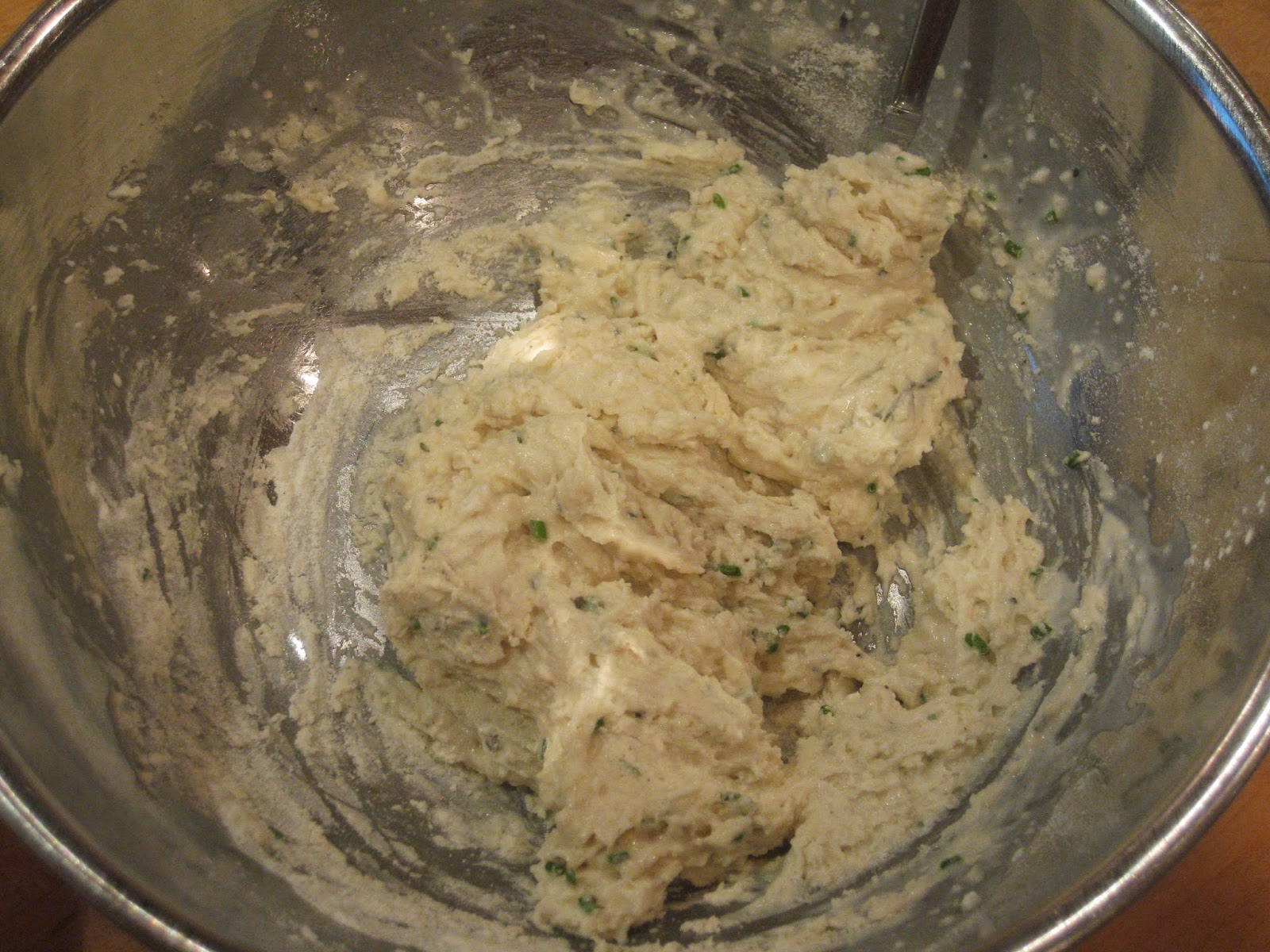
Add about 1/2 cup of milk to the dry mixture, using a fork to gently stir it in.

You want a sticky, wet dough, and may not need all of the milk, so add a bit at a time.


Drop the dough on top of the beef. I usually make about 5 - 6 dumplings.

Cover the pot and allow the beef to continue on a slow boil for 10 minutes before checking the dumplings.

They should be puffed up and dry on the top, with no wet sticky dough remaining. Leave them for a few more minutes if needed.


Remove the pot from the heat and serve the dumplings and braised brisket immediately.


  • These dumplings are quick and easy, and very light and fluffy, soaking up the gravy nicely. The dry ingredients and butter can be incorporated and kept in the refrigerator ahead of time.
  • The dumplings are best served immediately, but as we never have any left over, it's not really a problem. The recipe can also be doubled to make more dumplings.
  • Any stew can be topped with the dumplings...I've used them with chicken, beef and pork stews as well as soup.
  • Add any vegetables you have on hand...onions, zucchini, red peppers, turnips, potatoes (white or sweet). Beans or chickpeas can also be added.
  • I used beef brisket, but any tougher cut of meat can be used, as it is braising for a few hours to tenderize and add flavour. Try bottom round, shank, shoulder and don't limit yourself to beef.
  • I found that the rub had all the seasonings required, and added no extra salt or pepper.
  • If you are not using the rub, add fresh herbs to the broth...rosemary, thyme, sage or oregano or bayleaf.
  • I had beef stock in the freezer; use water or vegetable stock if you have none.
  • Instead of beer try red wine, the last bit of coffee in the pot or extra stock.
  • The cooked beef can be frozen.
  • Leftovers can be used in pasta sauce, to make pulled beef sandwhiches, used in a meat lasagne or served with potatoes and eggs as a hash, for breakfast or lunch.
  • Instead of dumplings, serve the beef with rice, noodles, mashed potatoes or Gnocchi or make the biscuits from the post  Corn and Bacon Chowder with Cheese Biscuits.

Saturday, 28 March 2015

Chicken Hand Pies


The cream cheese that has been in the fridge for a while was the inspiration for these little pies. The pastry that uses part cream cheese and part butter is very tender and flaky, and easy to make. I used boneless, skinless chicken thighs, and took the opportunity to use up another one of the spice rubs that were in the spice drawer.


Make the pastry first to allow time for it to rest and chill before rolling it out.

In the bowl of a stand mixer combine:

4 ounces of cream cheese
10 ounces of butter

Mix with the paddle attachment until they are well combined.


Add:

2 cups of flour
1/4 teaspoon salt

Mix until just starting to form a dough.


Remove the dough from the mixing bowl and gently press it together.


Divide the dough into 8 equal pieces, press into discs and wrap well.

Chill for at least 2 hours before rolling the dough out.


To make the filling:


Sprinkle the rub onto the chicken thighs, and massage into the meat.

You will need about 2 tablespoons of rub for 6 chicken thighs.


Brown the chicken in a hot pan, using a bit of olive oil to prevent sticking.


When both sides of the chicken are well browned, add:

1 cup chicken stock.

When the stock comes to a boil, turn the heat down and cover the pan. Simmer until the chicken is tender and starting to fall apart easily.


Remove the chicken from the pan, and allow it to cool completely, before shredding it. Reserve the liquid and the pan.


Heat the pan, and add a drizzle of olive oil.

Add:

1 large onion, diced
Salt and pepper

Cook until the onion starts to soften and colour.


Add:

3 medium carrots, diced

Cook until the onions are caramelized and the carrots start to colour.


Add enough flour to coat the vegetables when stirred in, 1 - 2 tablespoons.


After you have cooked the flour for a couple of minutes, add the reserved liquid to the pan, and stirring, bring it to a boil.

Turn the heat down and simmer until the carrots are tender.

Taste and adjust seasoning.


Return the shredded chicken to the pan, and add 3/4 cup frozen peas.

Remove from the heat and allow to cool completely.


Now it's time to make the hand pies...


Heat the oven to 425F. Line 2 baking sheets with parchment paper.


On a lightly floured surface, roll each disc of pastry out to between 1/4" and 1/8" thickness.

Using a bowl or plate, cut an 8" circle from each one.

Continue until all 8 pieces of dough have been rolled and trimmed.


Divide the cooled filling between the 8 dough circles, placing it in the centre.

Brush the edge of each circle with egg wash.


Bring the edges together over the filling and pinch closed in the centre.


Working from the centre to the sides, fold and crimp the edges together.

Place each pie onto the baking sheets, and brush with the remaining eggwash.


Bake for 10 minutes, then turn the heat down to 375F and continue to bake until the pastry is golden and the filling is heated through, about 25 -  30 minutes altogether.  I served the pies with a side salad of romaine lettuce, candied almonds, strawberries and blue cheese.


  • The pies are an alternative to pot pie, which was my original plan. These are a bit more fun to eat.
  • Any leftover cooked meat can be used instead of braising chicken thighs...roast chicken, pork or beef; diced ham; cooked fish such as salmon or cod.
  • For a basic rub combine equal parts of paprika, brown sugar, salt, black pepper and cayenne pepper. Cumin or chili powder can be added, and the black and cayenne peppers can be adjusted to your personal heat tolerance. If stored in a well sealed container the rub will keep for a few weeks.
  • The rub provides all the necessary seasoning, it just needs adjusting with a bit of salt and/or pepper. Adding the flour to the vegetables absorbs any residual fat and allows the reserved liquid to thicken when it boils, making a yummy gravy.
  • Use vegetables that are available. Try celery, zucchini, peppers, mushrooms.
  • Add cheese to the filling just before filling the pies if you want, for a gooey richness. Any cheese will work, but I tend to choose stronger cheese such as blue, aged cheddar, asiago or smoked cheese.
  • It is important that the filling is completely cold when it is added to the pastry. Any heat in the filling will start to melt the fat in the dough, and cause it to collapse before it goes into the oven.
  • Fresh chopped herbs can be added to the pastry; make sure they are finely chopped so that they don't cause the dough to tear when it is being rolled out.
  • The dough can be made a few days ahead and kept in the fridge; it can also be frozen.
  • The pies can be filled and frozen, to be taken out and baked at a later date.
  • Use a sweet filling such as apples baked with brown sugar and cinnamon; cream cheese combined with honey, vanilla and chopped nuts; bananas, chocolate chunks and mascarpone cheese.
  • The dough can be left as one large piece, and rolled out to line a pie plate; or used as the pastry for a pot pie.
  • Leftover pies make a great lunch for work the next day.

Monday, 23 March 2015

Vacation Shopping and Cooking - Week 2


Onto Week 2 of our vacation, Maui. We knew we would be meeting up with friends for dinner towards the end of the trip, and this involved making a dessert...what else but something with pineapple and macadamia nuts!? Of course, this involved buying a bit extra at the grocery store, so we planned for it by using the same items for other meals.

We also knew that our friends would be quite happy to take any of our leftovers and use them up, but we still shopped carefully, keeping in mind what we could bring home with us.

We ended up bringing home the spices, baking powder, white chocolate chips and mustard. Our friends took the remainder of the Parmesan, cheddar cheese, 3 eggs, some tortillas, 3 English muffins, the remaining Caesar salad dressing, the remaining olive oil and balsamic vinegar and some butter.

MAUI:

We were on the island for 6 full days, and 1 dinner. We had an activity that included breakfast and lunch, and ate at our friends' place for dinner one night.

We bought the following:

2 marlin steaks
6 chicken breasts, boneless and skinless
2 small lobster tails, 8oz total
1/4 lb thinly sliced ham

18 large eggs
5 litres of milk
1 litre of whipping cream
4 individual Greek yoghurts
1 lb butter
1 block cheddar cheese
1 package of grated mozzarella (small)
1 8oz package of goat cheese
2 packages of chicken, garlic and rosemary ravioli

2 boxes of cereal
1 package of 8 tortillas
1 package of English muffins
6 breadrolls
1 package of garlic naan bread, 4 pieces
2 cans tuna
1 can of tomato sauce, 6 oz
1 snack size bag of roasted cashews
1 bag of all purpose flour, 500g
1 can of baking powder, 4 oz
1 package of white chocolate chips
1 package of macadamia nut pieces
1 can of pineapple chunks
1 bottle of Caesar salad dressing

1 basket of fresh raspberries
4 bananas
3 oranges
2 limes
1 lemon
1 bunch of green onions
1 bunch of asparagus
2 onions
2 avocadoes
1 head of garlic
4 tomatoes
2 red peppers
5 large Yukon gold potatoes
1 package of strawberries
1 mango
1 papaya
1 package of prewashed baby romaine


This was used to make:

  • Breakfast sandwiches with fried eggs, ham and cheddar cheese on English muffins.
  • Cereal with fruit.
  • Fruit salad with yoghurt.
  • Fruit and yoghurt smoothies (with rum!)
  • 2 chicken breasts were rubbed with cumin and chili powder and pan seared, then thinly sliced to make chicken Caesar salad, along with grated Parmesan and cashew pieces instead of croutons.


The marlin was rubbed with black pepper, chili flakes and lemon zest and pan seared. This was served with a chopped romaine heart salad, avocado, blanched asparagus and warm boiled potato slices that were tossed in the lemon-mustard dressing while still warm (this helps the potatoes to absorb the dressing and all of its flavour).


2 of the chicken breasts were diced and quickly cooked, along with sliced red pepper and onions and a heaping teaspoon of curry powder. A third of the can of tomato sauce was added, along with about 3/4 cup of the whipping cream and that was allowed to reduce until thickened. This was spread onto 2 of the Naan breads, and topped with goat cheese, before baking.


  • The other 2 Naan breads were spread with some of the remaining tomato sauce, and topped with ham, sliced tomato, onions and mozzarella cheese before baking. Two kinds of pizza for dinner, with leftovers for lunch the next day.


 The ravioli was cooked and used for 2 dinners. A creamy tomato sauce was made by reducing 1 cup of whipping cream, adding the remaining tomato sauce and some grated Parmesan. 2 chicken breasts were diced and cooked with onion and red peppers, and tossed with the pasta and sauce. Blanched asparagus and crumbled goat cheese was served with the ravioli the first time; the second time it was served with grated Parmesan.


  • Sandwhiches with ham, tomato, lettuce and cheese
  • Wraps with cooked chicken, Parmesan, romaine and Caesar salad dressing.
  • Tuna melts with some of the buns, tuna, mayo, green onions and cheddar cheese.
  • Potato salad with green onion and hard boiled eggs, again! A picnic lunch favourite of ours.


I made a frittata with the last of the cooked potatoes, the last of the ham, some red pepper and green onion, and cheddar cheese.


We were given 2 absolutely HUGE avocados by a gallery owner. We gave one to our friends and filled the other one with lobster salad for a rather rich lunch on our last day.


 I poached the lobster tails in salted boiling water for 5 minutes, then removed the meat when they had cooled. Chopped green onions, lemon zest, 1/2 teaspoon of Dijon mustard, the chopped lobster meat and a bit of mayonnaise were combined then put inside the pit cavity of each lobster half. Yummy!


  • I used the flour, baking powder, chocolate chips, macadamia nuts and raspberries to make a  coffee cake for dessert/snacks.
  • Macadamia nut pancakes for  breakfast, using some of the flour, baking powder, eggs and macadamia nuts.
  • The remaining macadamia nuts were used to make a biscuit for shortcake, along with flour, baking powder, butter, brown sugar, whipping cream and egg. This was split and filled with rum whipped cream, and the pineapple chunks that I caramelized with butter, brown sugar and rum. Dessert with friends!

We spent $178 on food, which averages out to around $30 per day, for 2 people, including a dessert for 4. This is not including alcohol and bottled water.

I did not spend all my time cooking, we spent most of it snorkelling, hiking, driving to sights around the islands, water tubing and heading out on a boat for the day. What we did not spend time on was driving around looking for somewhere to eat, waiting for a table and menu, waiting for food and then having to continue on with our day.

We brought a collapsible cooler and ice packs in our luggage and were able to take lunch, snacks and cold drinks with us if we needed, which is perfect when you have been snorkelling or hiking for a few hours and want something right away! We were able to eat lunch or dinner out in the open, with an amazing view wherever we were.

Sunday, 22 March 2015

Vacation Shopping and Cooking - Week 1


We just returned from a lovely, relaxing 2 week vacation in Hawaii, spending 1 week on Kauai and 1 week on Maui. We were lucky enough to have a self contained unit with a fully equipped kitchen, as well as the use of a BBQ. This, in my opinion is the best way to travel, for a few reasons:

  1. You are not restricted to restaurant hours, you can eat whenever you are hungry, with no waiting for tables or service.
  2. You can choose to eat healthier.
  3. You can also spend less of your holiday budget on food, and more on entertainment/sightseeing!

The trick, of course, is to shop carefully and menu plan well, so that you don't end up throwing away good food at the end of the trip. This is especially the case if you are flying, or travelling between countries, as there are often restrictions on what is allowed on the flight or through customs, and sometimes both.

The other thing to keep in mind is that you want to plan on making quick, simple yet tasty meals, so you don't spend your beach time in the kitchen!

I am going to share the food we bought and the meals I made with them, and hopefully this will give you some ideas for your next vacation, or next weeknight meal. I will also let you know how much we threw out at the end of the vacation...I was impressed with how little it was. Of course, with some friends arriving the day before we left, and taking some of the things we weren't allowed to bring back on the plane, this helped lessen our waste.

Some self-contained vacation resorts often have a donation box located in the lobby for unused items to be donated, either to a local food bank or to arriving guests. If this is not the case, we always offer unused items to neighbouring units who will be staying on after we have left.

KAUAI:

We were on the island for 6 full days, and one day that included breakfast and lunch.


We bought the following:

1 pack of bacon
6 chicken breasts, boneless, skinless
6 chicken thighs, boneless, skinless
1 lb of thinly sliced beef strips, suitable for stirfry
2 fresh ahi tuna steaks
1/4 pound of thinly sliced ham
1/4 pound thinly sliced turkey

18 large eggs
1/2 pound of butter
1 block of cheddar cheese
4 oz package of goat cheese
4 oz package of blue cheese
1 small wedge of Parmesan
5 litres of milk

2 boxes of cereal
1 loaf of sourdough bread
6 buns
1 package of English muffins
1 package of 8 tortillas
1 pound of coffee
1 small bottle of balsamic vinegar
1 500ml bottle of olive oil
1 small jar of Dijon mustard
1 500ml jar of mayonnaise
1 small travel sized salt and ground black pepper
1 500g brown sugar
1 can of roasted, diced tomatoes
1 500g package of pasta
3 spices (they were buy 2, get 1 free, so I decided to add to the basics such as cinnamon and chili flakes supplied in our unit) - ground cumin, curry powder and chili powder

4 bananas
1 lime
1 lemon
1 bunch of green onions
2 avocados
1 bulb of garlic
2 onions
1 thumb sized piece of ginger
4 fresh tomatoes
2 red peppers
a small bag of new potatoes
1 bag of washed mixed greens
1 bag of romaine hearts
1lb of fresh strawberries


This seems like a lot, but we used most of it that week, bringing the spices, oil and vinegar, mustard, mayo, romaine hearts, coffee and some cereal with us to Maui, as we had a cooler to keep the refrigerated items in while on the plane.

With this we made:

  • Sandwhiches and wraps for lunches : using some of the cooked chicken breasts and leftover chicken thighs in the wraps, or to make curried chicken salad; egg salad using the eggs and green onion; ham and turkey with tomato, lettuce and cheese.
  • Breakfast sandwhiches with toasted English muffins, ham, cheese and poached eggs.
  • Scrambled eggs with sourdough toast and bacon. 
  • Cereal with fresh fruit.


French toast with lime caramelized bananas, goat cheese and bacon, using the lime juice and brown sugar to make a caramel to heat the sliced bananas in and using eggs, milk and brown sugar to make the French toast with the sourdough bread.

  • BBQ chicken breasts, marinated in chili flakes, cumin, garlic, brown sugar and lime zest and juice served with a mixed green salad, using the greens, tomato, avocado and a roasted red pepper.


Chopped salad with Moroccan spiced chicken thighs, marinated in ginger, garlic, cumin, chili flakes and cinnamon and braised with lightly caramelized onions until falling apart; served with chopped romaine hearts, tomato, red pepper, avocado and crumbled goat cheese.


  •  Pasta with thinly sliced beef, onions, diced tomatoes and blue cheese, served with Parmesan garlic bread.
  • Potato salad with bacon bits and hard boiled eggs


Breakfast potato hash with bacon and green onion, topped with poached eggs and grated cheddar cheese.


     Pan seared ahi tuna steaks with romaine heart salad, new potatoes and avocado; the tuna was rubbed with lemon zest, olive oil, mustard and the lemon juice was used with mustard and olive oil to make a dressing.


    • Beef fajitas using the remaining thinly sliced beef, thinly sliced red peppers and onions all cooked with garlic, cumin and chili powder and served with shredded romaine hearts, grated cheddar and chopped avocado and fresh tomato in warm tortillas.
    • Warm chicken sandwhiches on half the buns, using pan seared chicken breasts, caramelized onions and blue cheese mayonnaise.

    We ate well, and spent around $240 on food, not including alcohol and bottled water. We had lunch out once, and also had treats such as ice cream, coffee and so on during our travels around the island, and had one activity that included lunch.

    That comes to an average of $40 per day, for 3 meals each for 2 people. You cannot eat out on that kind of budget!